Confidence is Crucial
Independent University soil sampling research clearly shows that a sufficient number of cores and precise depth control are crucial for the confidence of soil test results.
Here is an excerpt from Iowa State University’s CROP 3108 talking about some requirements they’ve found for the number of cores in a quality sample:
As a minimum, take 10 to 12 cores or borings per sample and place all soil in a sample bag. A large number of cores is helpful to represent the sample area because of small-scale variation typically found in fields. This number of cores per sample is recommended for both zone and grid sampling. More cores will lessen the effect of a core taken from a fertilizer band or unknown dissimilar soil test area.
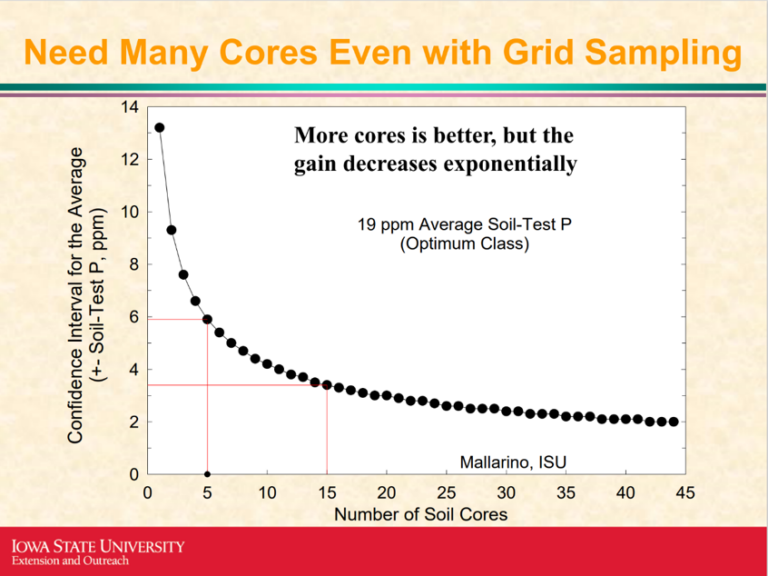
Even with expert guidance like that, there is no real industry standard governing soil sampling. While just about anyone can put dirt in a bag, not everyone can take a quality soil sample. If you want true clarity, you need consistent high-quality soil sampling from a partner who specializes in bringing you actionable data.
SoilView sets the standard for quality sampling
The SoilView System uses a combination of extensive sampler training, custom-fit equipment, and robust verification and monitoring processes to ensure every soil sample taken is using the same process: 10 to 12 perfect cores taken at the exact depth required, no exceptions. Anything less in your valuable soil becomes just dirt.
Nothing But Quality Soil Cores
Each field has obstacles that can impact the quality of a soil core; rocks, crop residue, recent applications, and the list goes on. That’s why every core is visually inspected before it is allowed to become part of the SoilView soil sample. Quality is our top priority every time, because an incorrect soil test result has the potential to cost agronomists and their growers big in the end.
Proper Spread of Cores
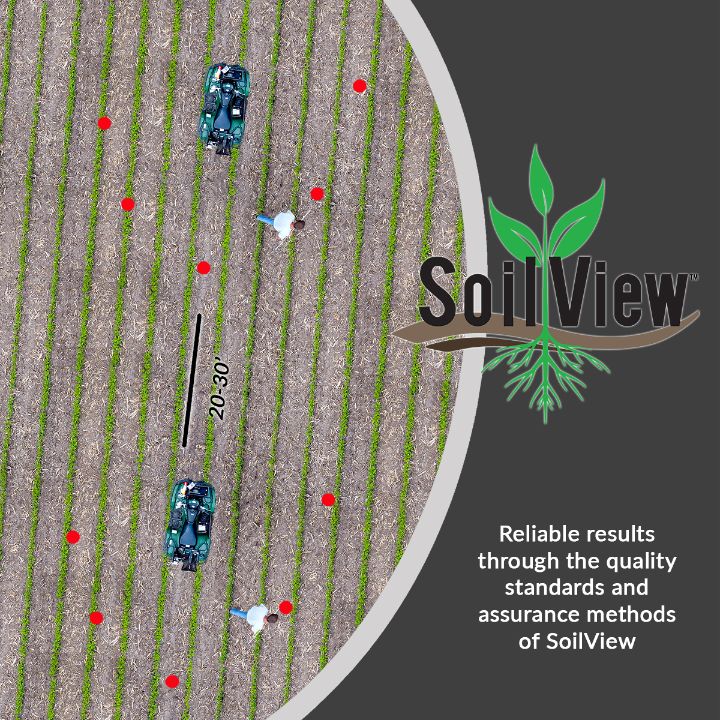
Variability exists in every field, changing within feet or even inches. Designing a core placement protocol that spreads out the cores over a larger area, and intentionally choosing core locations from row to row, reduces the possibility of an unseen nutrient anomaly skewing the results of the sample. With our Expanded Center Point method, SoilView ensures a consistent sample that is representative of that area of the field.
Don’t Underestimate the Power of a Quality Soil Sample!
The best technology used with incorrect nutrient recommendations will not work. A lot is riding on the decisions made with the soil test data, and cutting corners during soil sampling can have severe consequences down the line. SoilView will ensure that you get a reliable sample every time, and that is a valuable truth you can confidently take to your growers.